NAATI Assyrian Translator for Marriage Certificate Translation
Email us directly or upload your documents here for translation:Melbourne
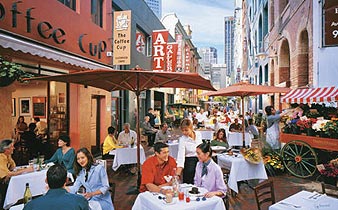
Melbourne is the capital and most populous city in the state of Victoria, and the second most populous city in Australia after Sydney. The Melbourne City Centre (also known as the "Central Business District" or "CBD") is the hub of the greater geographical area (or "metropolitan area") and the Census statistical division-of which "Melbourne" is the common name. Melbourne was founded in 1835 (47 years after the European settlement of Australia) by settlers from Launceston in Van Diemen's Land. It was named by Governor of New South Wales Sir Richard Bourke in 1837, in honour of the British Prime Minister of the day, William Lamb, 2nd Viscount Melbourne. During the Victorian gold rush of the 1850s, it was transformed into one of the world's largest and wealthiest cities.
Assyrian Marriage Certificate Translation for Melbourne
 Getting your marriage certified translated for official use in Melbourne is easy. Our NAATI certified Assyrian translators are ready to assist you and everything can be done online.
- Leading provider for NAATI certified Assyrian translation
- Fast Assyrian translation with no extra charges
- Experienced NAATI certified translators based in Australia
Assyrian NAATI Translators
Melbourne Document Translation Services
 Get professional document translation for personal or business use. Our translators can handle any type of financial, technical or medical document, with the support of a specialised language DTP team for typesetting translations into design material such as brochures, product packaging and technical reports.
All documents received are confidential. Get in touch today for any translation requirement.

More about the Assyrian Language
Assyrian Neo-Aramaic (also known as Aššuri, Assuri, Ashuri, Aturi, Assyrian, Aisorski, Assyrianci, Assyriski, Lishana Aturaya, Neo-Syriac, Sooreth, Suret, Sureth, or Suryaya Swadaya) is a Neo-Aramaic dialect, spoken by an estimated 220,000 people (1994 SIL estimate), formerly in the area between Lake Urmia, north-western Iran, northern Iraq, north-eastern Syria and Siirt, south-eastern Turkey, but now more widely throughout the Assyrian–Chaldean–Syriac diaspora. Ethnologue estimates that as of the mid-1990s, about 80,000 speakers lived in the Assyrian homeland in the Middle East, while the majority of speakers lived abroad, most of them in the United States or in Europe. Most speakers are members of the Assyrian Church of the East and the Ancient Church of the East.