
NAATI Dutch Translator for Marriage Certificate Translation
Email us directly or upload your documents here for translation:Newcastle
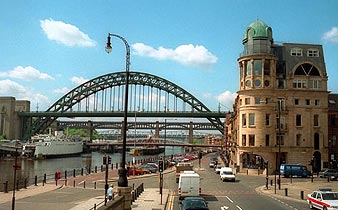
The Newcastle metropolitan area is the second most populated area in the Australian state of New South Wales and includes most of the Newcastle and Lake Macquarie Local Government Areas. It is the hub of the Greater Newcastle area which includes most parts of the Local Government Areas of City of Newcastle, City of Lake Macquarie, City of Cessnock, City of Maitland and Port Stephens Council. Famous for its coal, Newcastle is presently the largest coal exporting harbour in the world, exporting over 97 Mt of coal in 2009-10 with plans to expand annual capacity to 180 Mt by 2013. Beyond the city, the Hunter Region possesses large coal deposits. Geologically, the area is located in the central-eastern part of the Sydney basin.
Dutch Marriage Certificate Translation for Newcastle
 Getting your marriage certified translated for official use in Newcastle is easy. Our NAATI certified Dutch translators are ready to assist you and everything can be done online.
- Leading provider for NAATI certified Dutch translation
- Fast Dutch translation with no extra charges
- Experienced NAATI certified translators based in Australia
Dutch NAATI Translators
Newcastle Document Translation Services
 Get professional document translation for personal or business use. Our translators can handle any type of financial, technical or medical document, with the support of a specialised language DTP team for typesetting translations into design material such as brochures, product packaging and technical reports.
All documents received are confidential. Get in touch today for any translation requirement.


More about the Dutch Language
Dutch is closely related to English and German and is said to be between them. The history of the Dutch language begins around AD 450–500 after Old Frankish, one of the many West Germanic tribal languages, was split by the Second Germanic consonant shift. At more or less the same time the Ingvaeonic nasal spirant law led to the development of the direct ancestors of modern Dutch Low Saxon, Frisian and English.
The northern dialects of Old Frankish generally did not participate in either of these two shifts, except for a small amount of phonetic changes, and are hence known as Old Low Franconian; the "Low" refers to dialects not influenced by the consonant shift.