
NAATI Slovenian Translator for Marriage Certificate Translation
Email us directly or upload your documents here for translation:Hobart
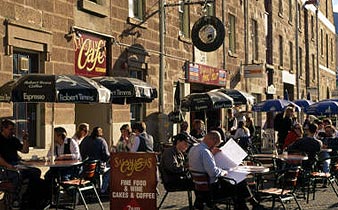
Hobart is the state capital and most populous city of the Australian island state of Tasmania. Founded in 1804 as a penal colony, Hobart is Australia's second oldest capital city after Sydney. In 2009, the city had a greater area population of approximately 212,019. A resident of Hobart is known as a "Hobartian". The city is located in the state's south-east on the estuary of the Derwent River. The skyline is dominated by Mount Wellington at 1,271 metres (4,170 ft) high.
Slovenian Marriage Certificate Translation for Hobart
 Getting your marriage certified translated for official use in Hobart is easy. Our NAATI certified Slovenian translators are ready to assist you and everything can be done online.
- Leading provider for NAATI certified Slovenian translation
- Fast Slovenian translation with no extra charges
- Experienced NAATI certified translators based in Australia
Slovenian NAATI Translators
Hobart Document Translation Services
 Get professional document translation for personal or business use. Our translators can handle any type of financial, technical or medical document, with the support of a specialised language DTP team for typesetting translations into design material such as brochures, product packaging and technical reports.
All documents received are confidential. Get in touch today for any translation requirement.


More about the Slovenian Language
Standard Slovene is the national standard language that evolved on the basis of Central Slovene dialects in the 18th century and consolidated itself through the 19th and 20th centuries. While distinct regional varieties descended from the older rural dialects still exist, the spoken and written language is uniform and standardized. Some dialects differ considerably from the standard language in phonology, vocabulary and grammar. Though not facing imminent extinction, such dialects have been in decline during the past century, despite the fact that they are well researched and their use is not discouraged by the authorities.